Double glazed units
Standard double glazed units in any overall thickness, low-e soft coat as standard, argon filled and warm edge spaced.
- Any overall thickness
- Low-e soft coat
- Argon filled as standard
Trade manufacture · Wembley HA9
Double and triple glazed units manufactured to your cutting list in Wembley. Trade accounts, same day quotations, collection from HA9 and delivery across London. Public welcome, but this is set up for the trade.
No forms. Call the workshop, or email and we will come back the same working day.

What we do
Units for window companies, builders, glaziers, shopfitters and conservatory installers. Send a cutting list and we will come back with a price and a lead time rather than a brochure.
Standard double glazed units in any overall thickness, low-e soft coat as standard, argon filled and warm edge spaced.
Three panes and two cavities where the frame rebate takes the depth and the specification calls for it.
Safety units for critical locations, barriers and overhead glazing, with the standard marked on the pane.
Acoustic interlayers and asymmetric builds for noise, and solar control coatings for overheating.
Obscure patterns, leaded designs and Georgian bar units made to your spacing, matched to existing where needed.
Accounts for regular customers, same day quoting on cutting lists, collection from HA9 and delivery across London.
The work
Illustrative images of the systems described above. Specification and finish are confirmed in writing with your quotation.
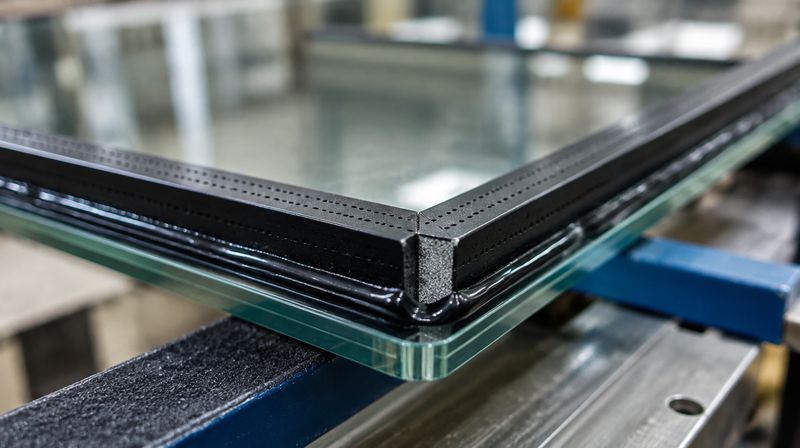
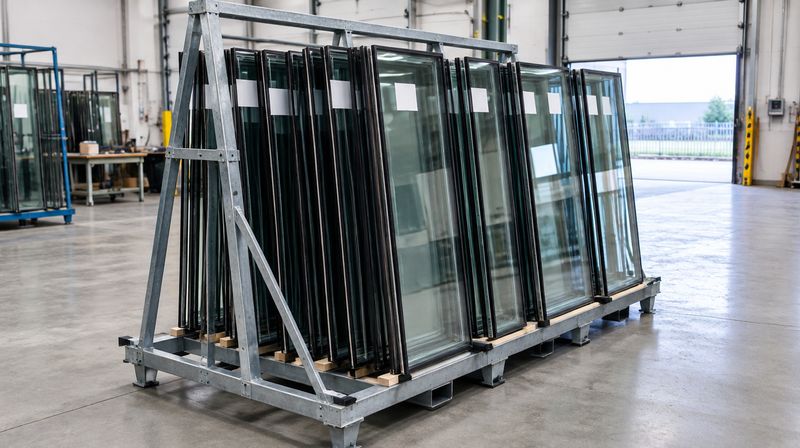
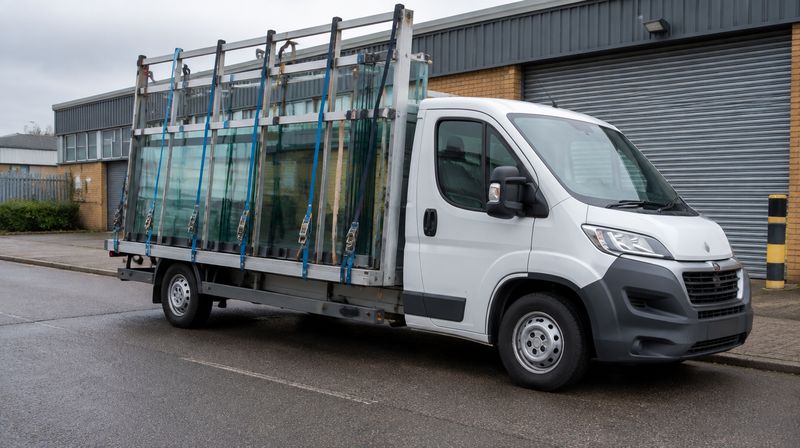
A sealed unit is four materials asked to stay bonded to one another through twenty years of expansion and contraction: glass, a spacer, a desiccant and two seals. Almost every failure you will see in sealed units in London traces back to one of those four components or to the way the unit was glazed after it left the factory. We make double glazed sealed units to your sizes in our own workshop on Atlas Road in Wembley, on trade terms. You measure, we manufacture, you fit.
That division of labour is the whole business. We are not quoting against you, we are not surveying your customer behind your back, and we do not want your fitting work. What we want is a clean cutting list and enough notice to make the units properly.
This is a trade manufacturing supply. We do not sell single units over the counter to the public, we do not come out and measure your bay, and we do not glaze. If you have one cloudy window in your own house, our sister site handles misted double glazing for homeowners, measures the units itself and fits them.
The split is not snobbery, it is risk. When a window company sends a cutting list, the measurements are theirs, the glazing is theirs and the clearances in the rebate are theirs. When a homeowner orders a unit from a drawing they made with a tape measure, somebody still has to carry the consequence of a unit that is two millimetres too wide, and it should not be the person who cannot do anything about it. Different jobs, different pricing, different paperwork.
A unit that mists in its first two or three years has almost always failed for one of four reasons, and they leave different evidence. Poor adhesion of the seal to the glass, which is a factory problem. Excessive movement or point loading in the rebate, which is a glazing problem. Ultraviolet attack on an exposed edge seal, which is a design or edge cover problem. Or standing water in the rebate, which is a drainage problem and by a wide margin the most common of the four.
You can usually tell a manufacturing failure from an installation failure in five minutes without taking anything apart. A factory fault tends to show up across a batch rather than in one unit, appears regardless of which elevation the unit is on, and shows an even haze or a perimeter bloom all the way round. An installation fault is local. It starts in the bottom corners, it is worse on the sills that hold water, it affects the units in the worst-drained frames and leaves the identical unit two metres away perfectly clear.
Lift the bead and look at the rebate before you phone anybody. Tide marks, silt, a damp timber base, a drainage slot full of paint or sealant, or a unit sitting flat in its own puddle all tell you what happened. If the secondary seal has gone soft, dark and spongy along the bottom edge only, that unit drowned. It did not fail.
If a customer rings us about a misted unit, the first question is which edge it started from and what the bottom of the rebate looks like. We would rather spend ten minutes establishing that than send a free remake into the same wet rebate and do it all again in two years.
The secondary seal on a sealed unit is water resistant. It is not designed for permanent immersion, and nothing on the market is. Put a unit in a rebate that holds water and you are asking a polysulphide or hot melt seal to behave like a tanking membrane. It will manage for a while and then it will let go, usually along the bottom edge and up into the corners first.
So the drainage is the job. The rebate has to be drained to the outside, the slots have to be clear and they have to stay clear after the decorator has been round. On timber the base of the rebate should be sound, primed and never left bare. On aluminium and uPVC the drainage path is designed in, which means it can also be blocked by a bead of silicone applied by somebody who thought they were weatherproofing it. Sealing the outside of a drained and ventilated system traps water inside it.
This matters commercially as well as technically. Every manufacturer in London writes a guarantee that excludes units glazed into frames without working drainage, because every manufacturer has paid for remakes that were never their glass. If you are the fitter, five minutes clearing a slot protects your margin more than any upgrade you can sell.
A unit should sit on setting blocks, not on the frame, and not on a smear of silicone. The blocks hold the glass clear of the drainage path, spread the weight into the sash where the sash can carry it, and keep the unit square in the opening. Two blocks positioned in from the corners, sized to the rebate width, is the whole technique. Units glazed with no blocks end up bearing on one bottom corner, which concentrates load into the edge seal and the glass edge at the same time.
Bridging is the other common error. A packer, a fixing, a screw head or a lump of mortar touching the glass across the cavity transfers movement straight into the edge seal. Anything hard in contact with the edge of a unit becomes a lever. The seal also needs covering: leave too little edge cover and you expose the secondary seal to direct sunlight, which degrades anything that is not silicone. A stepped unit, a shallow bead or a frame modified on site to take a thicker unit are the three ways people accidentally leave an edge seal in the sun.
The glass is rarely the thing that hurts. What hurts is the second visit. If you price a job on the supply cost of the units plus a day of labour, one wrong size or one chip discovered during glazing turns a profitable job into a break-even one, because you are paying a fitter twice and remaking at your own cost if the error was on your list.
Price with those realities visible rather than hidden:
The other half of pricing properly is sequencing. Measure after the frames are in, not before. Order toughened content first because it has the longest tail. Confirm anything shaped from a template rather than a dimension. And never let a customer talk you into ordering glass from a drawing that has not been built yet, because the drawing is not the building.
The accounts that run smoothly for years all behave the same way. Their cutting lists arrive in writing with the units numbered against the openings, their sizes are glass sizes rather than frame sizes, they tell us the thickness and the specification per line instead of per order, and they ask before assuming. They also check a delivery while the driver is still there, which is the single habit that prevents most disputes.
The accounts that go wrong usually go wrong in the same three ways too. Sizes given verbally and then disputed. A change made halfway through a batch that nobody wrote down. And damage reported a fortnight after a clean signature, by which time nobody can honestly say whether it happened on our rack, on your van or on the scaffold. None of that is about trust. It is about evidence, and evidence is cheap to create at the moment of handover and impossible to create later.
We would rather lose an order than take a cutting list we do not believe. If a size looks wrong against the others on the same elevation, we will query it before we cut, and if you confirm it we will make it exactly as written.
The sealed units trade in London is more varied than the phrase suggests, and the four groups we deal with want quite different things. Window companies making their own frames want consistency and a lead time they can plan a fitting diary around. Joinery shops and builders want someone who will take a template seriously and make one awkward shaped unit without sighing. Shopfitters and conservatory installers want large units, often toughened, handled and delivered without damage. Maintenance contractors doing sealed unit replacement across London on managed housing want small quantities, quickly, repeatedly, with the make-up recorded so the next visit matches the last.
All of it is double glazed units made to measure from your sizes, out of the Wembley workshop, on trade terms. There is no stock range to choose from and nothing is cut to a catalogue size. If what you need is one unit for your own house, go to the homeowner site instead, and if you need technical help deciding a make-up before you price a job, phone 020 4634 6045 and ask. We would rather answer a specification question for free than remake a unit later.
How it works
Four stages, and we tell you where you are at each one.
Width first then height in millimetres, with the glass build, spacer colour and any toughening stated per line.
We price the list and confirm the lead time. Anything ambiguous we query before manufacture rather than after.
Cut, washed, spaced, sealed and gas filled in Wembley. Units are labelled per line so they arrive identifiable.
Collection from HA9 or on a London delivery round, crated and on edge.
Specification
Every quote states the glass build, the standards it is made to and the hardware. If a quote you are comparing does not, that is worth asking about.
Units are cut, spaced, sealed and gas filled on Atlas Road in Wembley, and labelled against your own cutting list.
| Item | Specification |
|---|---|
| Standard | Manufactured to BS EN 1279 for insulating glass units. Safety glass within a unit is marked to BS 6206 Class A. |
| Overall thicknesses | Commonly 20mm, 24mm and 28mm double glazed, and 36mm and 44mm triple. We make to the rebate you specify, not to a fixed range. |
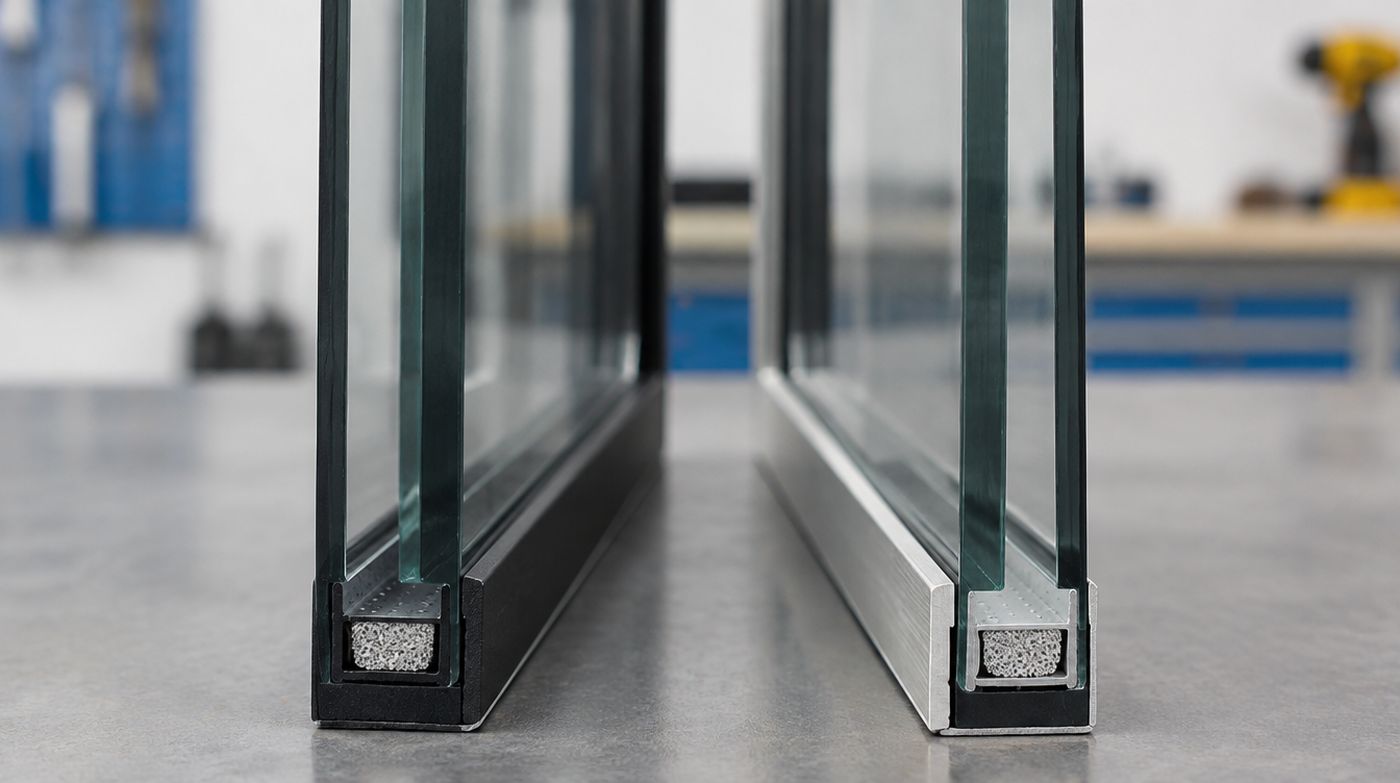
| Spacer bars | Warm edge composite as standard in black, grey or white. Aluminium available where a job needs to match existing. |
| Gas filling | Argon as standard. Krypton available for narrow cavities, typically in slim units for period frames where the cavity is too small for argon to perform. |
| Glass options | Low-e soft coat, low-iron, toughened, laminated, acoustic laminated, solar control, obscure patterns, tinted and mirrored. |
| Labelling | Units are labelled by line against your cutting list, so a van load arrives sortable rather than as a stack of similar sizes. |
FAQ
Both, but the pricing, lead times and process here are built around trade customers working from a cutting list. If you are a homeowner with one or two misted windows, a glass-only replacement service will be a better fit, because most of the cost of a single unit is the visit rather than the glass.
One line per unit: width first then height in millimetres, the glass build for each pane, overall thickness, spacer colour, whether toughening is needed, and bar spacing or pattern where relevant. Mark the outer face on anything directional. State plainly whether sizes are the unit size or the aperture, because that single ambiguity causes most remakes.
You are, if the sizes came from you. We manufacture to the list supplied and we will query anything that looks inconsistent, but we cannot verify a measurement we did not take. Where we survey, the sizes are ours and so is the remake.
Plain double glazed units are usually a few working days. Toughened, laminated, acoustic and patterned glass take longer because the processing is longer, and triple glazed units sit at the longer end. We confirm the lead time with the quotation rather than after the order.
Usually. Bring or send a sample of the pattern where you can, along with the spacer colour and bar spacing. Common obscure patterns are still in production and we hold the usual ones. Discontinued patterns are the exception and are better discussed before you promise a customer a match.
We deliver across London on scheduled rounds and units travel crated and on edge, labelled per line. Glass must never travel flat. If you are collecting, bring a vehicle that lets the units stand on edge and something to pad and strap them against.
In detail
A page on each part of what we do, written to answer the question properly rather than to sell.
How a unit is actually made, what to specify, and what separates a unit that lasts twenty years from one that fails in five.
Most sealed unit orders arrive with half the specification stated and the rest left to the maker. This page is about what each part of the build actually does, and how to write it down so the unit that turns up is the one you intended.
Reglazing somebody else’s windows is a different job from fitting your own. The glass is the straightforward part. Money is lost in the survey, in the glazing method you did not expect, and in the second visit you did not price for.
Made to measure sounds like a promise of exactness. It is really a promise of a stated tolerance, held consistently, on dimensions somebody else surveyed. Knowing where the tolerances sit is how you stop paying for remakes.
Before anyone argues about U-values, two numbers decide whether triple glazing is even possible in a given window. The rebate depth, and the weight the hardware is rated to carry.
Most writing about trade glass supply is suppliers describing themselves. This page is about the half of the relationship you control: how you receive glass, how you store it, how you order, and what you do when one breaks.
Glass is heavy, fragile, made to order and not returnable. Distance does not simply add a delivery charge to that. It adds days to every mistake either side makes.
Coverage
We cover Greater London from our Wembley workshop, with most work in north, west and central London. See the full list of areas.
One line per unit with sizes, build and spacer colour. We quote the same working day and confirm the lead time with the price.